Weekly newsletter to help you pass your Six Sigma exam and apply Six Sigma techniques in the real world.
TSF #35 Six Sigma Case Study: Delayed Setting Time of Cement in Concrete
|
Concrete is the backbone of modern construction. But what happens when the quality of cement begins to fail, and the concrete doesn’t set on time? This isn’t just a nuisance. Delays can cause costly project delays, quality issues, and even safety risks. Introduction: A Hypothetical DMAIC Case Study Inspired by ReadersThis article presents a hypothetical Six Sigma case study on delayed setting time of cement in concrete, structured using the DMAIC (Define, Measure, Analyze, Improve, Control) methodology. It was inspired by a question from a reader of the SixSigmaStudyGuide.com newsletter. If you’d like to see a fictional Six Sigma case study tailored to your industry or challenge, contact us here. We welcome reader submissions and topic requests! Why Setting Time MattersWhen the Foundation Refuses to SetThink about baking bread. Once the dough is mixed, you expect it to rise and firm up within hours. But what if the dough just sat there, staying sticky and unformed all day? Your kitchen schedule would collapse: no bread for dinner, wasted ingredients, frustrated guests. That’s exactly what happens on construction sites when concrete takes too long to set. Normally, concrete starts firming up in 2–4 hours and is ready for finishing in 4–6 hours. But when delays hit, entire projects stall. The ripple effects can be huge:
In Six Sigma terms, delayed setting isn’t just a materials problem, it’s a process problem. And process problems, no matter the industry, always cascade into cost, quality, and customer trust. DefinitionsSetting time refers to the period between when water is added to cement and when the concrete begins to harden.
Delays in setting impact projects by:
Define Phase: Framing the ProblemOn a large construction site, engineers noticed that concrete batches were taking 8–12 hours to set instead of the expected 4–6 hours. Imagine running a kitchen where dinner is supposed to be ready in four hours, but many nights, the meal doesn’t leave the oven until twelve! That’s what engineers were facing on a major construction project. Concrete that should have set firm in 4–6 hours was instead taking 8–12 hours. The ripple effect was brutal:
The team defined the challenge clearly:
To tackle it, they formed a cross-functional improvement squad:
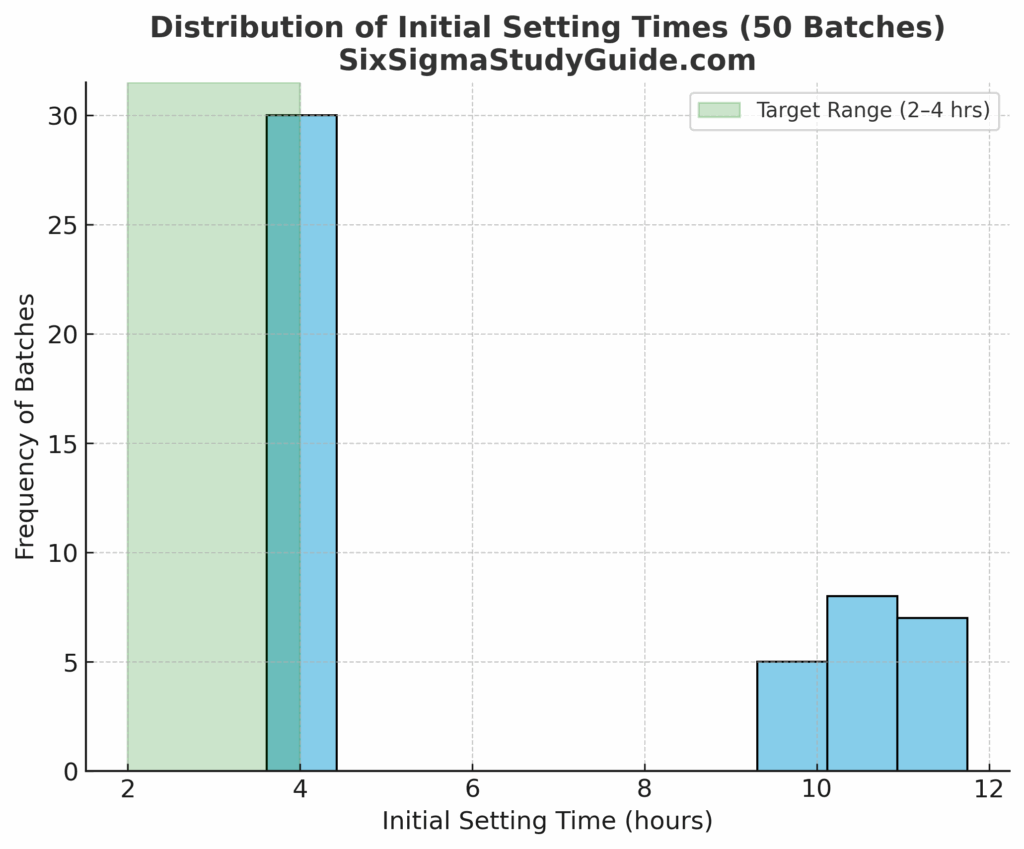
Measure Phase: Collecting the DataThe first step was to measure the problem with precision. Over four weeks, the team tracked 50 concrete batches, recording not just when each batch set, but also the conditions that might be influencing it:
When the numbers came in, the picture wasn’t pretty: MetricAverageTargetInitial Setting Time6.5 hours2–4 hoursFinal Setting Time11 hours4–6 hoursBatches Out of Spec40%< 5% Visualizing the Problem
Measurement System Analysis (MSA)Before acting on the data, the team first asked: Can we trust the measurements? They conducted a Gage Repeatability & Reproducibility (Gage R&R) study using the Vicat apparatus, the standard tool for measuring cement setting times. The test involved:
The goal was to confirm that variation in results came from the process itself — not from inconsistent measurement. Results (simplified):Source of Variation% ContributionAcceptable ThresholdRepeatability (equipment variation)2.1%<10%Reproducibility (operator variation)2.3%<10%Total Gage R&R4.4%<10%Part-to-Part Variation95.6%— Conclusion: With less than 5% total variation due to measurement error, the system was considered reliable and fit for purpose. This gave the team confidence that the wide spread of setting times observed was real — not just noise from the testing method. Measurement Phase Findings The good news: The measurement system itself was solid (validated with less than 5% variation). The bad news: Nearly half (40%) the batches were wildly off target. Analyze Phase: Finding Root CausesOnce the data was in, the team asked the most important question: Why is the concrete taking so long to set? They applied a mix of Six Sigma tools to peel back the layers:
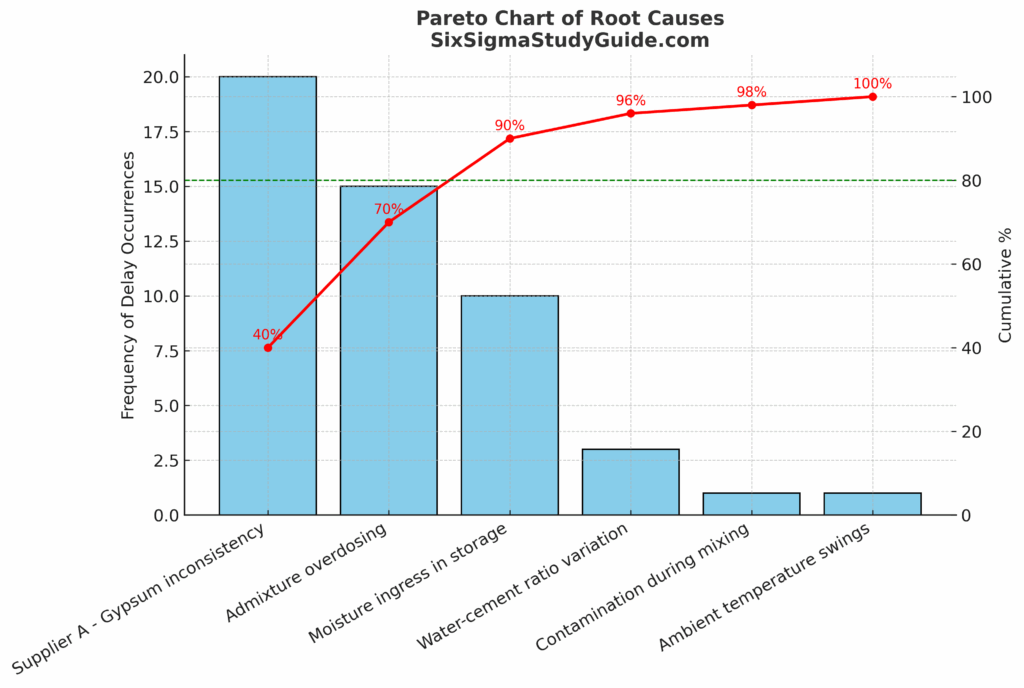
Root Causes Identified
Visual Insight: A Pareto chart ranking delay contributors showed these three factors towering above the rest, classic “vital few vs. trivial many.”
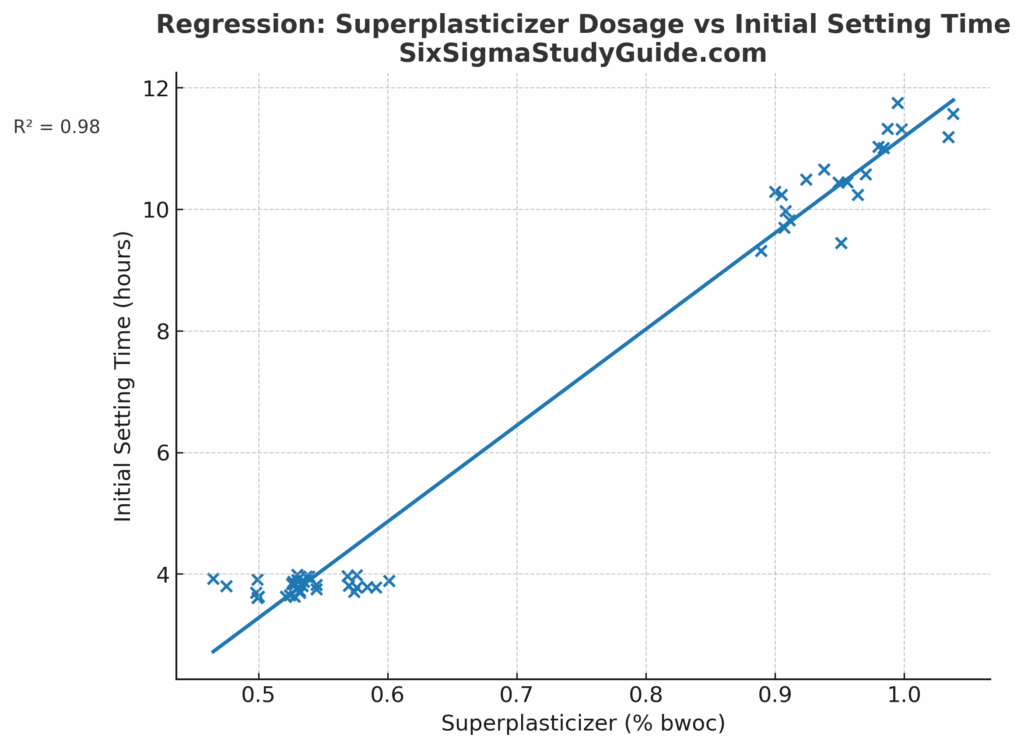
Regression Analysis: Linking Chemistry to DelaysTo move from suspicion to proof, the team turned to regression analysis. They plotted superplasticizer dosage (a chemical that helps concrete flow) against initial setting times. The result was unmistakable: as dosage levels crept higher, setting times stretched longer. The regression line told the story quantitatively, with an R² of 0.98, a near-perfect correlation (aren’t fictional case studies amazing!?) In plain terms: the more chemical added, the longer crews had to wait.
Improve Phase: Implementing SolutionsArmed with clear root causes, the team moved from analysis to action. Their improvements tackled problems at the source:
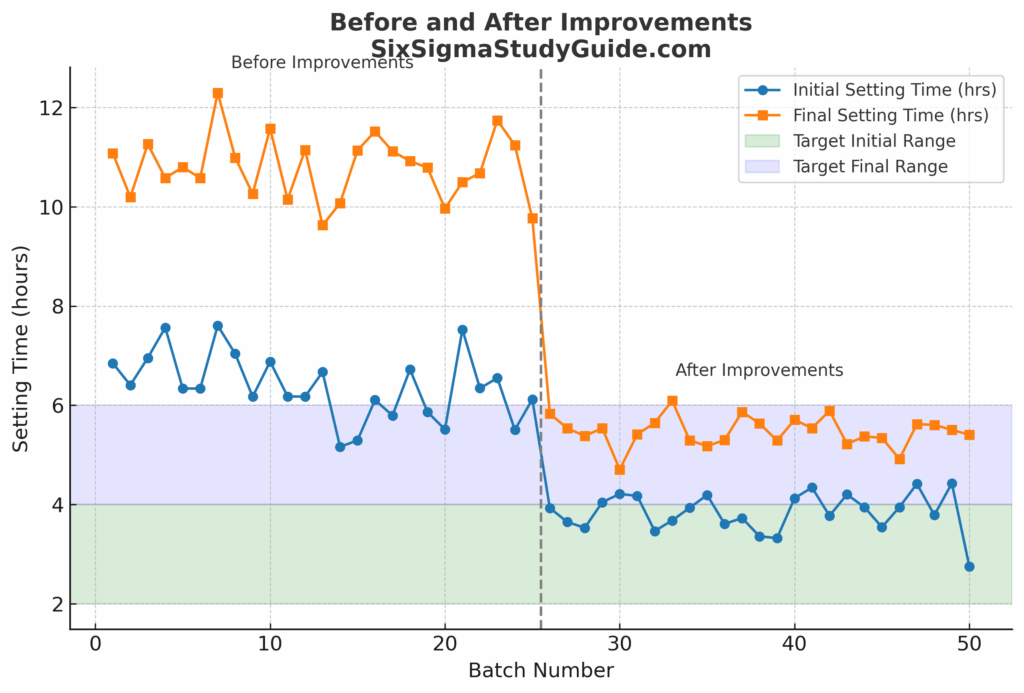
Post-Improvement ResultsMetricBeforeAfterInitial Setting Time6.5 hrs3.8 hrsFinal Setting Time11 hrs5.5 hrsBatches Out of Spec40%<5% In less than three months, the project flipped from chronic delays to predictable performance. Visualizing the Turnaround
Control Phase: Sustaining the GainsFixing the problem was only half the battle. The real test was making sure the process didn’t slide back into old habits. To lock in the improvements, the team put guardrails in place:
Sustained Benefits
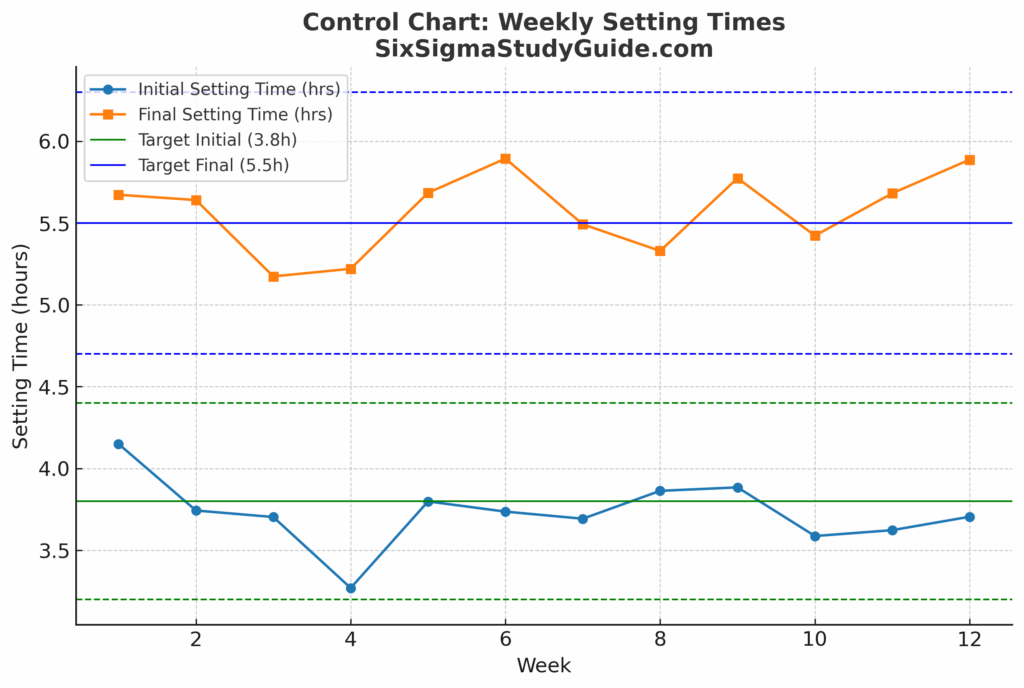
Visual Insight: The control chart of weekly setting times showed a stable, predictable process. No more long tails or nasty surprises.
Keeping the Process on Track Lessons Learned
Pro Tip: Whether you’re in construction, finance, or tech, simple SPC tools (histograms, Pareto charts, and control charts) can flag issues early, before they spiral into crises. Conclusion: DMAIC Delivers ResultsBy sticking to the Define, Measure, Analyze, Improve, Control framework, the project team turned a six-figure headache into a streamlined process. It’s a reminder that Six Sigma isn’t just for factories, it works anywhere processes, people, and performance intersect. Got a challenge you’d like to see solved with Six Sigma? Submit a fictional case study request! Best, Ted When you’re ready, there are a few ways I can help:First, join 30,000+ other Six Sigma professionals by subscribing to my email newsletter. A short read every Monday to start your work week off correctly. Always free. — If you’re looking to pass your Six Sigma Green Belt or Black Belt exams, I’d recommend starting with my affordable study guide: 1)→ Pass Your Six Sigma Green Belt 2)→ Pass Your Six Sigma Black Belt You’ve spent so much effort learning Lean Six Sigma. Why leave passing your certification exam up to chance? This comprehensive study guide offers 1,000+ exam-like questions for Green Belts (2,000+ for Black Belts) with full answer walkthroughs, access to instructors, detailed study material, and more. |
Welcome to the Six Fix!
Weekly newsletter to help you pass your Six Sigma exam and apply Six Sigma techniques in the real world.
Most people don't have a time problem. They have a feedback problem. You sit down to study with every intention of making progress, and an hour later you look up wondering where the time went. Long sessions can feel productive. They rarely are. That gap between effort and learning is exactly what Pomodoro fixes. What I see over and over is this: capable people doing capable work, but without a tight feedback loop. Pomodoro converts unfocused time into short, measurable practice with constant...
How to Turn a Green Belt Project into Career Momentum Over the past few months, I’ve had more people reach out asking for career advice than I have in years. Building valuable skills still matters, but there’s another piece people miss: you have to be able to clearly show what you did and why it mattered. What’s interesting is this: most of the people I talk to are doing good work. They’ve led projects, improved processes, delivered real results. But when I ask them to explain what they...
Which Test, When? A Simple Guide to Picking the Right Statistics Tool for Six Sigma Statistical questions on exams often feel like riddles because they dress a simple decision in formal language. The fastest way to stop guessing is to translate the prompt into one clear question, then pick the smallest, most direct test that answers it. Translate the prompt into plain English first When you see a question, underline these three things: the variable type (mean, proportion, variance), the...